When the summer heat peaks or winter’s chill sets in, a high-performing climate control system is the ultimate defense for your home. Upgrading your heating and cooling setup is an exciting investment that promises lower utility bills, cleaner indoor air, and perfectly balanced temperatures. However, a major misconception persists among homeowners: the belief that setting up a new climate system is strictly a mechanical job.
In reality, your heating and cooling equipment is the most complex, power-hungry appliance connected to your home’s infrastructure. It relies on a delicate balance of thermodynamics, high-voltage circuitry, and sensitive computer control boards. While a mechanical technician understands airflow and refrigerant loops, the backbone of any successful system relies on the power supply feeding it. Without a solid electrical foundation, even the most expensive equipment will fail to perform safely or efficiently. Bringing a certified electrical specialist into the process ensures your home can handle the load, your family remains safe from electrical hazards, and your investment lasts for decades.
Upgrade to Predictive Climate Zoning Systems
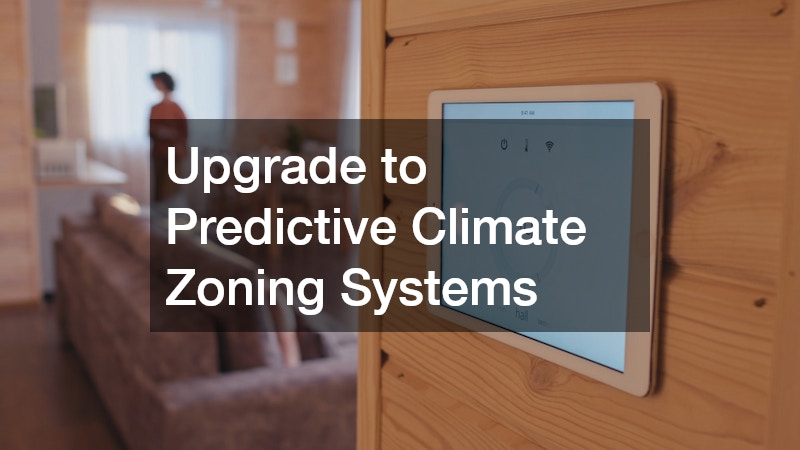
Traditional heating and cooling setups suffer from a fundamental design flaw: they measure the temperature of an entire house from a single thermostat located in a central hallway. This setup completely ignores the fact that different rooms experience vastly different thermal dynamics. A kitchen filled with cooking appliances, a south-facing living room with massive floor-to-ceiling windows, and a subterranean basement will all have drastically different climate profiles at any given moment. Relying on one sensor inevitably creates massive temperature imbalances, leading to situations where the upstairs bedrooms are sweltering while the downstairs living areas feel like an icebox.
Predictive climate zoning solves this problem by decentralizing climate control. Instead of relying on a single point of data, these advanced systems utilize an array of wireless smart sensors distributed across distinct zones in your home. These sensors continuously communicate with a smart central hub, mapping out real-time temperature variations. When a specific room begins to drift away from its target temperature, the system adjusts airflow dynamically, delivering conditioned air precisely where it is needed most without wasting energy on empty rooms.
-
Occupancy Tracking: Utilizing integrated motion and infrared sensors to determine which rooms are currently active, allowing the climate system to prioritize occupied spaces over vacant guest rooms.
-
Geofencing Integration: Linking your climate control network to the global positioning system on your smartphone, enabling the system to lower energy consumption when you leave and restore your preferred comfort settings just as you pull into the driveway.
-
Microclimate Tailoring: Allowing household members to set customized temperature baselines for individual rooms, ensuring everyone enjoys their preferred environment without sparking battles over a single thermostat.
To make these advanced zoning networks truly effective, your physical ductwork must be capable of responding to digital commands. Working alongside a qualified HVAC contractor allows you to safely integrate motorized smart dampers into your existing duct branches. These dampers act as electronic valves, opening and closing in precise increments to steer air throughout your home based on the real-time data harvested by your smart sensor network. Access to reliable AC repair resources ensures that minor air distribution faults can be corrected swiftly before they disrupt your home’s total climate harmony.
Leverage Diagnostic Environmental Performance Indicators
The most valuable asset in a modern smart home is data. For decades, residential climate equipment operated in the dark, running until a component experienced complete mechanical failure. Homeowners were left completely unaware of underlying issues until the system stopped working entirely on the hottest day of the year. Modern smart climate improvements eliminate this vulnerability by turning your equipment into a self-monitoring machine that tracks its own operational health.
High-end automation platforms utilize advanced onboard data streams to evaluate performance over time. By looking closely at cycle lengths, power draw spikes, and air pressure variations, the system essentially creates a continuous operational health assessment. This detailed analytical feedback loop acts like an interactive HVAC test prep tool, letting homeowners run self-diagnostic checks, review performance trends, and spot micro-failures before they trigger a system-wide freeze or overheating incident.
-
Predictive Maintenance Diagnostics: Analyzing subtle changes in electrical current draw from fan motors to detect early bearing wear before the motor locks up.
-
Airflow Restrictive Triggers: Monitoring the duration of cooling cycles against outdoor temperature data to identify when air filters or internal coils are becoming dangerously restricted.
-
Cycle Pattern Tracking: Logging the frequency of short-cycling, a phenomenon where a unit turns on and off rapidly, signaling electrical faults or an improperly sized system.
When a system runs efficiently, it moves a specific volume of air across its internal heat exchangers. If that airflow drops due to a clogged filter or a slipping belt, the system must work much harder, driving up your utility bills and placing immense stress on the compressor. A smart diagnostic platform catches these deviations immediately. For example, if the system notices that it takes twenty minutes longer to drop the indoor temperature by two degrees compared to the same outdoor conditions last week, it flags the variance.
This immediate window into your system’s operational integrity allows you to address minor maintenance needs proactively. Instead of waiting for a total breakdown that requires an emergency air conditioner repair call, you can look at your dashboard, see the exact component that is underperforming, and address it on your own schedule. This proactive approach saves thousands of dollars in secondary damage and guarantees that your home’s climate remains perfectly stable all year long.
Implement Automated Indoor Humidity Regulations
When evaluating indoor comfort, most homeowners focus exclusively on the temperature displayed on their thermostat. However, air temperature is only half of the comfort equation. Relative humidity plays an incredibly powerful role in how hot or cold an indoor environment actually feels to human skin. High humidity prevents sweat from evaporating, making a 75-degree room feel sticky, oppressive, and much warmer than it actually is. Conversely, low humidity in the winter accelerates evaporation, stealing heat from your body and making a well-heated room feel drafty and bone-dry.
Smart moisture control systems eliminate this issue by linking whole-home dehumidifiers and evaporative humidifiers directly into your central automation network. These intelligent systems don’t just read the humidity inside a single room; they actively pull real-time weather data feeds from the internet to track outdoor dew points and barometric pressure. By cross-referencing indoor moisture levels with outdoor atmospheric trends, they automatically adjust your home’s moisture balance without requiring any human intervention.
-
Transpiration Protection: Preventing wood floors, cabinetry, and musical instruments from warping, cracking, or splitting due to rapid seasonal shifts in indoor moisture.
-
Biological Hazard Mitigation: Keeping indoor relative humidity strictly below 60% to completely halt the reproduction of dust mites and the growth of toxic mold spores in hidden wall cavities.
-
Thermal Efficiency Enhancement: Optimizing moisture levels so that you can set your summer thermostat a few degrees higher and your winter thermostat a few degrees lower while maintaining an identical level of physical comfort.
During the muggy summer months, a smart thermostat can command your cooling system to run its compressor at a lower speed. This prolonged, slower cycle allows the cold internal coils to extract maximum moisture from the air without overcooling the house. If your current equipment is decades old and lacks the physical capability to vary its speeds or communicate with these advanced humidity management tools, continuing to patch it up becomes counterproductive.
At a certain point, investing in an AC replacement service becomes the most financially sound path to restoring comfort. Modern, variable-speed systems are designed from the ground up to integrate with smart indoor humidity tools, transforming how your home handles seasonal air moisture. Managing these variables through unified HVAC services allows you to protect your home’s structure from moisture damage while enjoying a crisp, comfortable indoor environment, regardless of the weather outside.
Deploy Dynamic Responsive Thermal Boundaries

A smart climate control system is only as effective as the physical structure holding the conditioned air inside. You can install the most advanced, highly efficient heating and cooling machinery available, but if your home’s building envelope is full of thermal leaks, that expensive air will escape straight into the atmosphere. Windows are traditionally the weakest link in any home’s thermal boundary, acting as literal holes in your insulation where cold winter winds and blazing summer solar energy pass directly into your living spaces.
To defend your home against this constant thermal transfer, you must create a responsive perimeter. Smart home improvements allow you to link automated window treatments, motorized cellular shades, and solar tracking arrays directly to your climate control hub. These devices don’t operate on a simple time clock; they utilize integrated light sensors and thermal cameras to monitor exactly how much radiant heat is striking your glass at any given moment, adjusting your home’s defenses in real time.
-
Solar Heat Gain Rejection: Automatically lowering south and west-facing blinds during intense summer afternoons to block greenhouse heating before it warms up your living room.
-
Thermal Insulation Barriers: Deploying heavy, honeycombed smart shades during freezing winter nights to create an insulating pocket of air that traps heat inside your home.
-
Daylight Harvesting Integration: Raising shades automatically on overcast winter days to let natural sunlight heat your floors for free, reducing the load on your furnace.
While automated blinds provide an excellent first line of defense, they cannot completely overcome structural degradation. If your window frames are warped, rotting, or utilizing outdated single-pane glass, your home will remain drafty and inefficient. When seeking a permanent solution to persistent comfort issues, sourcing a reputable local window replacement provider is a critical step. Upgrading to modern, double or triple-pane insulated glass units coated with microscopically thin low-emissivity (Low-E) layers drastically reduces heat transfer.
When you pair high-performance windows with a smart automation network, you create an incredibly resilient barrier. The reduced strain on your climate equipment means fewer unexpected breakdowns and a dramatically extended system lifespan. Should your equipment ever require a tune-up due to normal wear and tear over years of operation, having a reliable team handle your ongoing HVAC repair needs ensures your structural improvements and mechanical systems remain perfectly synchronized.
Synchronize Continuous Air Purification Networks

When thinking about indoor comfort, our minds immediately go to temperature and humidity. However, the air you breathe is just as critical to your overall well-being and comfort in a home. Stagnant air loaded with microscopic dust particles, seasonal pollen, pet dander, mold spores, and volatile organic compounds (VOCs) creates a heavy, oppressive environment that can trigger allergies, cause headaches, and degrade your quality of life.
Smart air purification networks address this issue by enabling continuous, automated air quality monitoring. Instead of running a loud portable air filter on a continuous, wasteful loop, smart networks place laser-based particle counters in key living zones. These sensors measure airborne particulates down to 2.5 microns in size.
-
Automated Particulate Scrubbing: Elevating the fan speed of your central system or localized HEPA filters the moment air pollution spikes, cleaning the room in minutes.
-
VOC Chemical Monitoring: Tracking off-gassing from household cleaners, new furniture, or paints, and automatically increasing fresh outdoor air exchange via smart ventilators.
-
Real-Time Filter Life Metrics: Measuring actual air resistance across your filtration media to calculate the exact expiration date of your filter based on usage, rather than an arbitrary calendar date.
To achieve true whole-home air purification, these smart sensors must be integrated directly into your primary air distribution network. A professional AC installation contractor can retrofit your existing ductwork with advanced, in-duct air purification tools like ultraviolet (UV-C) germicidal lamps or bipolar ionization systems. These commercial-grade tools actively neutralize pathogens, viruses, and odors right inside your air streams.
By linking these air-scrubbing technologies directly to your central automation hub, the purification network operates in perfect harmony with your heating and cooling cycles. The air is continuously cleaned, refreshed, and deodorized whenever your primary AC services cycle on. This creates a remarkably crisp, mountain-air freshness throughout your home, elevating your indoor environment from a simple shelter to a pristine wellness sanctuary.
Conclusion
Achieving a perfectly balanced, year-round indoor environment requires looking at your home as a single, interconnected system. Real comfort is no longer about forcing a single machine to run at maximum capacity until it breaks; it is about utilizing smart technology to create an intelligent, responsive living environment. By blending smart thermostat sensors, automated zoning, proactive system diagnostics, and dynamic window insulation, your home ceases to be a passive box and becomes an intuitive, self-regulating sanctuary.
While investing in these smart home improvements requires an initial investment of planning and capital, the return on that investment arrives every single day. You will see it in the form of lower energy bills, reduced mechanical stress on your home’s infrastructure, and an uncompromised standard of daily comfort for your family. By automating the tiny details of climate management, tracking your system’s health data, and reinforcing your structural boundaries, you can enjoy a flawless, worry-free indoor environment every day of the year, no matter what nature is doing outside your front door.